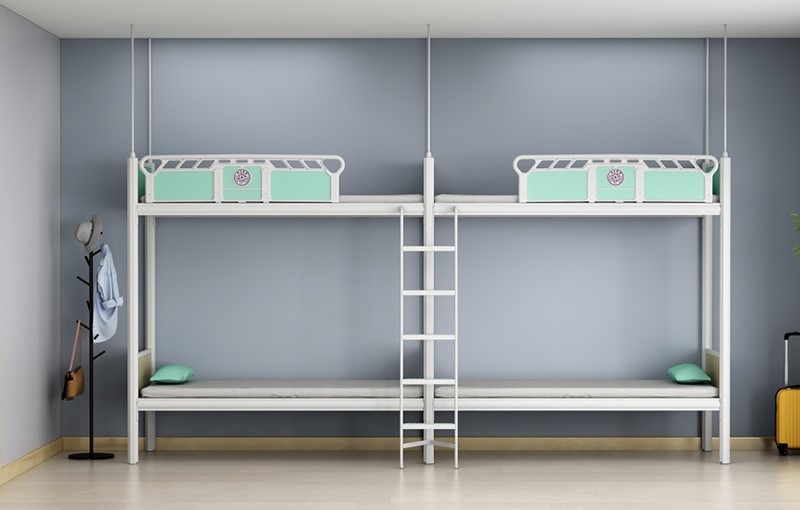
The core of daily maintenance for dormitory furniture is regular cleaning, moisture and rust prevention, tightening screws, and timely handling of damage. Different materials require specific maintenance measures to extend their lifespan and maintain a clean and safe living environment.
General Maintenance Principles
Keep it well-ventilated and dry: Dampness is a major cause of furniture aging, especially during the rainy season or in areas with high humidity. It is recommended to use dehumidifiers or dehumidifiers to maintain indoor humidity between 50% and 60%.
Avoid direct sunlight: Prolonged exposure to sunlight can cause wood to crack, coatings to age, and fabrics to fade. Curtains should be drawn or blackout curtains used for protection.
Prevent impacts from hard objects: Avoid impacts from sharp or heavy objects to the furniture surface to prevent scratches, dents, or structural damage.
Maintenance Methods by Material
Wrought Iron Beds/Metal Furniture
Daily Cleaning: Wipe away dust with a dry cloth weekly; deep clean monthly with a slightly damp towel and a neutral detergent.
Rust Prevention: When rust spots are found, sand with 400-grit or higher sandpaper until metallic shine → clean with alcohol → apply rust-preventive paint or nail polish → touch up with matching paint.
Prevention Measures: Keep away from dripping air conditioner water and seepage from window sills; use a dehumidifier in humid areas.
Screw Tightening: Inspect the screws for the first time after one month of use on a new bed, then every 6 months (every 3 months for high-frequency use).
Tighten the screws diagonally, using moderate force to avoid stripping; it is recommended to replace them with stainless steel screws for enhanced rust resistance.