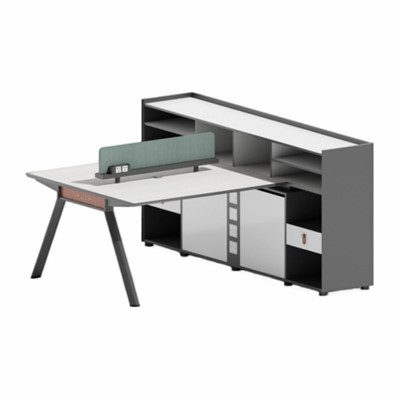
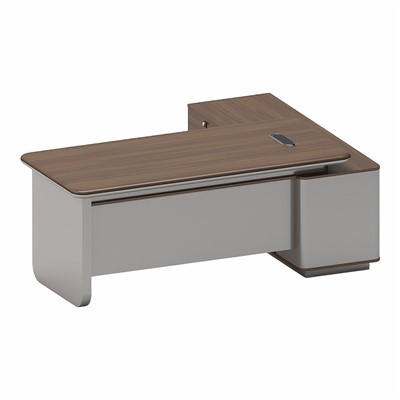
Office furniture is mainly made of solid wood, particleboard, metal, steel, upholstered furniture, and glass. Different materials have different strengths in terms of environmental friendliness, cost, durability, and applicable scenarios, allowing you to choose according to your actual needs.
Olid Wood: Made of natural wood, with a beautiful natural grain and a high-end feel, often used in executive offices or high-end conference rooms. Common woods include pine, beech, and ash.
Advantages: Environmentally friendly, durable, and naturally formaldehyde-free.
Precautions: Avoid drying cracks and impacts. Water-based paints or wood wax oils are preferred to reduce benzene pollution.
Particleboard: Made with engineered wood (such as particleboard or MDF) as the base material, with a melamine paper or wood veneer surface, this is currently the mainstream choice for office furniture.
Advantages: Low cost, diverse styles, stable structure, and easy to assemble, disassemble, and transport. Key Environmental Considerations: Look for E0 grade (≤0.050mg/m³) or ENF grade (≤0.025mg/m³) environmental standards, and prioritize MDI formaldehyde-free adhesive boards.
Metal and Steel Materials: Cold-rolled steel plates or aluminum alloys are the main materials, widely used in filing cabinets, office desk frames, and partition systems.
Advantages: Fireproof, moisture-proof, high strength, recyclable, suitable for industrial or high-density office environments.
Points to Note: The surface should be powder-coated or coated with water-based paint to avoid the pungent odor of oil-based paints.
Upholstered Office Chairs and Sofas: Core materials include high-density sponge, fabric, and environmentally friendly PU leather or top-grain cowhide.
Environmental Requirements: Sponge density must be ≥45kg/m³, TVOC release ≤0.1mg/m³; fabric is recommended to be OEKO-TEX Standard 100 certified.
Comfort: Mesh fabric offers good breathability, suitable for summer; suede provides warmth, suitable for northern winters.