Can a working table in a laboratory be moved easily?
As a supplier of laboratory working tables, I've often been asked whether these tables can be easily moved. The answer isn't as straightforward as a simple yes or no, as it depends on several factors.
Factors Affecting the Mobility of Laboratory Working Tables
Size and Weight
Laboratory working tables come in a wide range of sizes and weights. Smaller, more compact tables are generally easier to move. For instance, a basic single - person working table with a simple design and smaller dimensions can be relatively easy to relocate. These tables might weigh anywhere from 50 to 100 kilograms, and with a couple of people, they can be lifted and moved to a new location without much hassle.
On the other hand, large, multi - person laboratory island benches, like the ones you can explore at Laboratory Island Bench, are much more difficult to move. These benches can be quite massive, often weighing several hundred kilograms. They are usually built to be sturdy and stable, which is great for conducting experiments but makes them a challenge to relocate. The size also means that they may require special equipment such as forklifts or hoists to move safely.
Construction and Design
The construction of the working table plays a crucial role in its mobility. Tables with a modular design are often more easily movable. Modular tables are made up of separate components that can be disassembled and reassembled. This feature allows for easier transportation, especially if the table needs to be moved through narrow doorways or up and down stairs.
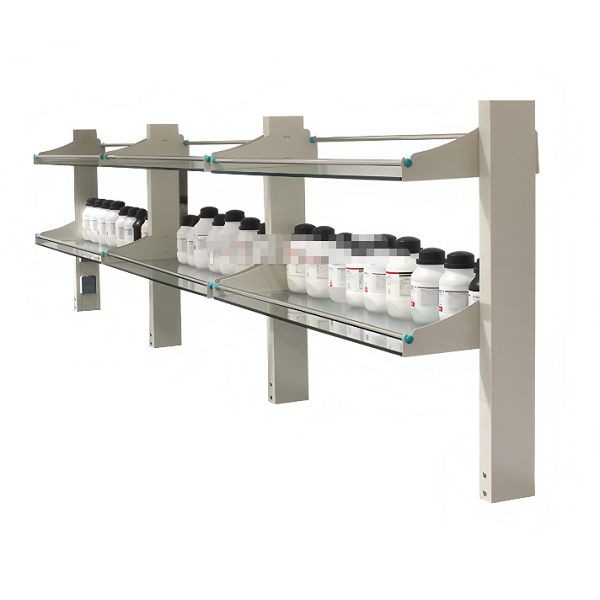
Some laboratory working tables are built with built - in features like reagent racks, as seen in Laboratory Reagent Rack. While these racks add functionality to the table, they can also make the table bulkier and more difficult to move. Additionally, if the table has a complex electrical or plumbing system integrated into it, moving the table becomes a more involved process. Special care must be taken to disconnect and reconnect these systems properly to avoid damage.
Surface and Stability Requirements
Laboratory working tables need to provide a stable surface for experiments. Tables with adjustable legs are designed to ensure a level surface, which is essential for accurate measurements. When moving a table, the adjustment of these legs may need to be readjusted at the new location. This can be time - consuming, especially if the floor at the new location has an uneven surface.
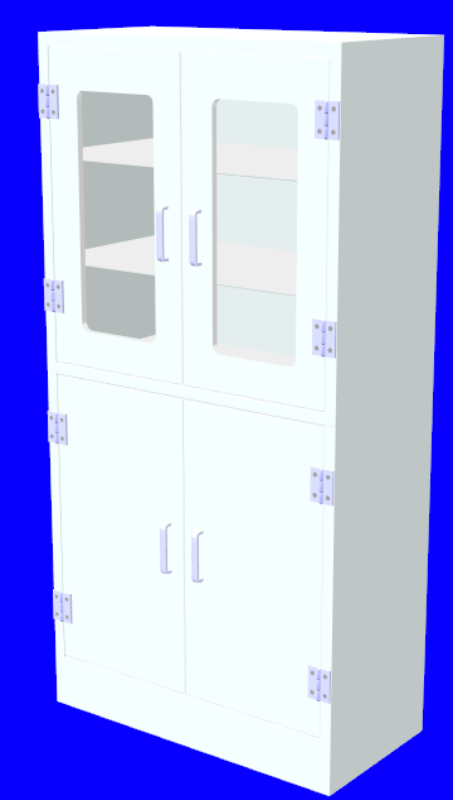
Moreover, some tables are designed to be fixed in place for safety reasons. For example, tables used for handling hazardous chemicals, which are often stored in Laboratory Chemical Cabinet, may be bolted to the floor to prevent accidental tipping or movement during an experiment. Moving these tables requires the proper tools and procedures to remove the bolts and then reinstall them at the new location.
Ease of Moving Different Types of Laboratory Working Tables
Standard Working Tables
Standard laboratory working tables, which are typically used for general laboratory tasks, can usually be moved with relative ease. These tables are often made of lightweight materials such as aluminum or plastic, and they may not have many built - in features. They can be moved by a small team of people without the need for specialized equipment. However, it's still important to handle them carefully to avoid damage to the table surface or any attached components.
Specialized Working Tables
Specialized working tables, such as those used for microscopy or precision experiments, are more difficult to move. These tables are often designed to minimize vibrations and provide a highly stable surface. Moving them can disrupt their calibration, and they may require professional re - calibration after being moved. Additionally, they may have sensitive equipment attached to them, which needs to be carefully disconnected and reconnected during the moving process.
Strategies for Moving Laboratory Working Tables
Planning
Before moving a laboratory working table, it's essential to plan the process carefully. This includes measuring the table and the pathways through which it will be moved to ensure that there is enough space. It's also important to identify any potential obstacles, such as doorways, stairs, or other equipment in the way.
Disassembly
If possible, disassemble the table into its components. This can make the table easier to move and reduce the risk of damage. For example, remove any detachable shelves, drawers, or reagent racks. Make sure to label all the components so that they can be easily reassembled at the new location.
Use of Equipment
For larger and heavier tables, use appropriate equipment such as dollies, forklifts, or hoists. This not only makes the moving process easier but also reduces the risk of injury to the people involved. When using equipment, make sure that the operators are properly trained.
Conclusion
In conclusion, whether a laboratory working table can be moved easily depends on its size, weight, construction, and the specific requirements of the laboratory. While some tables can be moved with relative ease, others may require significant planning, disassembly, and the use of specialized equipment.
If you're in the market for a laboratory working table and have specific mobility requirements, we're here to help. Our team of experts can assist you in choosing the right table for your needs and provide guidance on moving and installation. Whether you need a standard table or a specialized one, we have a wide range of options to suit your laboratory. Contact us to discuss your requirements and start the procurement process.
References
- General knowledge of laboratory furniture design and construction.
- Industry best practices for moving and installing laboratory equipment.