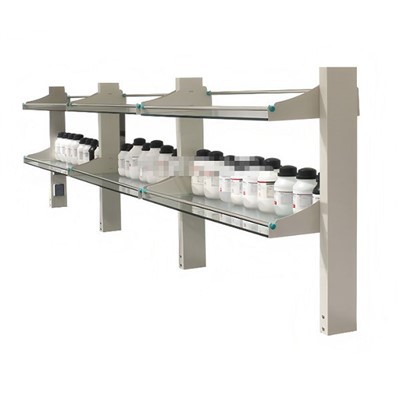
Securing a laboratory reagent rack to the wall is a crucial step in ensuring its stability and the safety of the laboratory environment. As a supplier of Laboratory Reagent Rack, I understand the importance of this process and am here to share some valuable insights on how to achieve it effectively.
Why Secure the Reagent Rack to the Wall?
Before delving into the how-to, let's first understand why it's necessary to secure the reagent rack to the wall. In a laboratory setting, reagent racks are often filled with various chemicals and glassware. Any instability can lead to the rack tipping over, which may result in the spillage of chemicals, breakage of glassware, and potential harm to laboratory personnel. By securing the rack to the wall, we can prevent such accidents and create a safer working environment.
Assessing the Wall and Rack
The first step in securing the reagent rack to the wall is to assess both the wall and the rack itself. The wall should be strong enough to support the weight of the rack and its contents. A solid concrete or brick wall is ideal, but if you have a drywall or partition wall, you may need to use special wall anchors to ensure a secure attachment.
Inspect the reagent rack for any pre - drilled holes or mounting points. Most high - quality reagent racks come with these features, which are designed to facilitate easy installation. If your rack doesn't have pre - drilled holes, you may need to drill them yourself, but make sure to do it carefully to avoid damaging the rack.
Choosing the Right Mounting Hardware
The choice of mounting hardware depends on the type of wall and the weight of the reagent rack. For a solid concrete or brick wall, you can use concrete screws or masonry anchors. These are strong and can provide a reliable hold. For a drywall, toggle bolts or molly bolts are a good option as they can distribute the weight over a larger area and prevent the wall from cracking.


When selecting the screws or bolts, make sure they are long enough to penetrate the wall and the rack securely. The diameter of the screws should also be appropriate for the size of the holes in the rack and the wall anchors.
Preparing the Wall and Rack
Once you have chosen the right mounting hardware, it's time to prepare the wall and the rack. Mark the positions on the wall where you will install the mounting hardware. Use a level to ensure that the marks are straight and at the correct height. If you are using a template provided by the rack manufacturer, place it on the wall and mark the holes accordingly.
On the reagent rack, align the pre - drilled holes (or the holes you drilled) with the marks on the wall. This will ensure that the rack is installed in the correct position and is level.
Installing the Mounting Hardware
Now it's time to install the mounting hardware. If you are using concrete screws or masonry anchors, drill holes in the wall at the marked positions. Make sure the holes are the correct size for the anchors. Insert the anchors into the holes and tap them gently until they are flush with the wall.
For drywall, use a drill bit to create a small hole for the toggle bolt or molly bolt. Then, insert the bolt through the hole in the rack and into the wall. Tighten the bolt until the rack is firmly attached to the wall.
Attaching the Reagent Rack to the Wall
After the mounting hardware is installed, carefully lift the reagent rack and align it with the mounting hardware on the wall. Insert the screws or bolts through the holes in the rack and into the wall anchors. Use a screwdriver or a wrench to tighten the screws or bolts, but be careful not to overtighten them as this may damage the rack or the wall.
Once the rack is attached, double - check its levelness using a level. Make any necessary adjustments to ensure that the rack is perfectly horizontal.
Additional Considerations
In addition to securing the reagent rack to the wall, there are some other factors to consider for stability. For example, you may want to use anti - vibration pads under the rack to reduce the impact of any vibrations in the laboratory. These pads can help prevent the rack from moving or shaking, especially if there are nearby equipment that generates vibrations.
Another consideration is the organization of the reagents on the rack. Make sure to distribute the weight evenly across the rack to avoid creating an imbalance. Heavy items should be placed on the lower shelves, while lighter items can be placed on the upper shelves.
Related Laboratory Furniture
As a laboratory furniture supplier, we also offer other products that can enhance the functionality and safety of your laboratory. For example, our Anti Static Work Bench is designed to prevent static electricity build - up, which is crucial when working with sensitive electronic components or flammable chemicals. Our Laboratory Island Bench provides a central workspace in the laboratory, allowing for easy access to equipment and reagents.
Contact for Purchase and Consultation
If you are interested in purchasing our laboratory reagent racks or other laboratory furniture, or if you have any questions about securing the reagent rack to the wall, please feel free to contact us. We have a team of experts who can provide you with detailed information and guidance on the installation process. We are committed to providing high - quality products and excellent customer service to meet your laboratory needs.
References
- Laboratory Furniture Installation Guide. [Publisher's Name], [Year of Publication]
- Safety Standards for Laboratory Equipment. [Organization's Name], [Year of Publication]